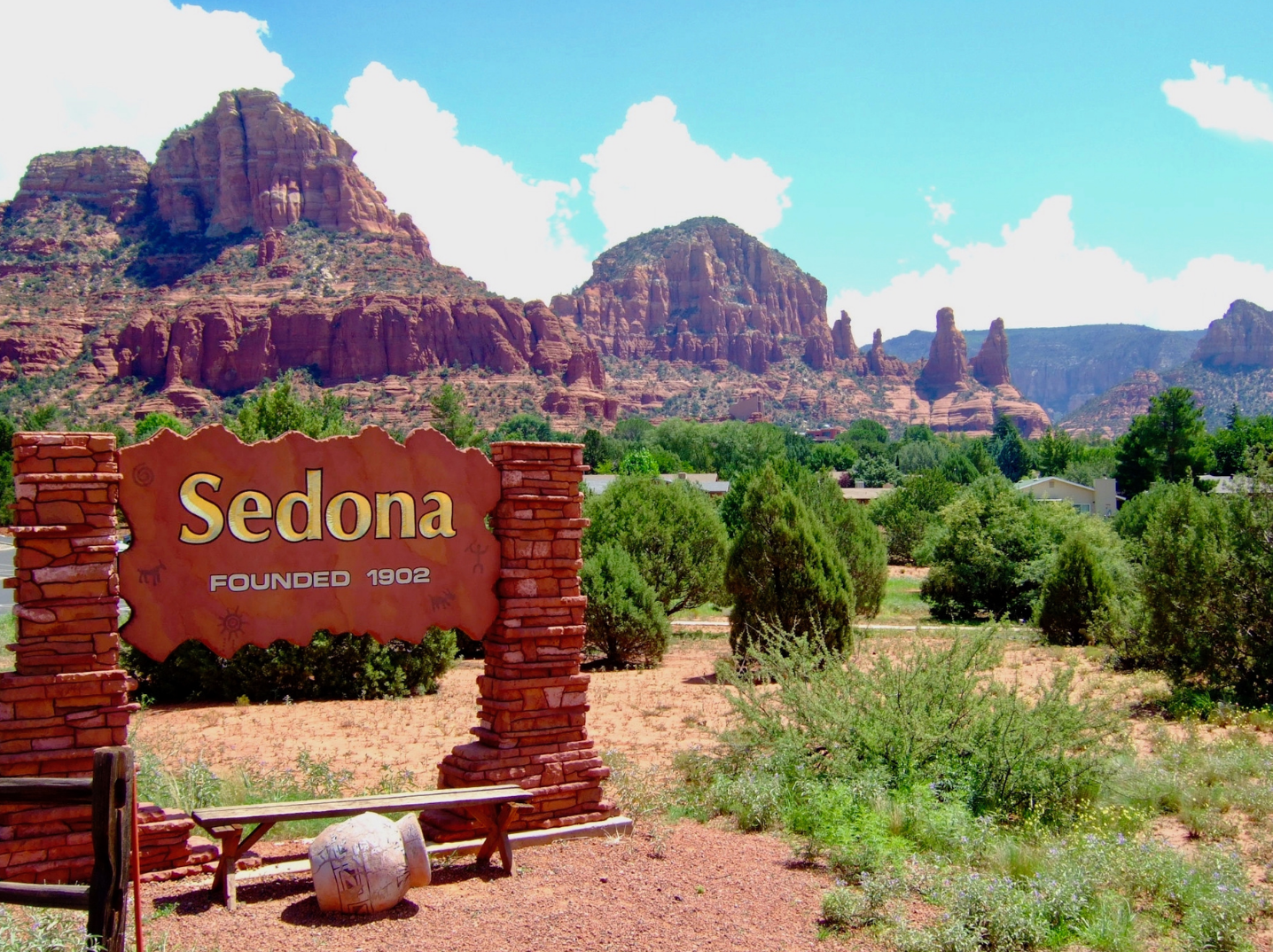
The 35th annual Sedona Arts Festival cut its admission to $5 a day for 2026, and the resulting plan from organizers and the local shuttle operator shows what it actually takes to make a popular event work: two separate parking systems, a scheduled fixed-route shuttle, and a paid on-demand option, each kept in its own lane.
Key Takeaways
- A lower price point increases turnout, but turnout is a logistics problem, not just a marketing win.
- Sedona’s plan keeps festival parking and trailhead parking completely separate, rather than treating one lot as overflow for the other.
- The free, no-reservation shuttle and the paid on-demand ride serve two different needs: fixed-route coverage of named trailheads, and point-to-point trips from lodging.
- Clear, dated, hour-by-hour information, not general reassurance, is what lets visitors plan around a system’s real limits.
- The same pattern applies to any transit or campus mobility program absorbing a sudden spike in demand from a fare cut, a new partnership, or a seasonal event.
A $5 ticket and a two-lot problem
The Sedona Arts Festival turns 35 this year. Organizers cut admission to $5 per day with help from a City of Sedona grant, and the event runs Saturday, Oct. 10 from 9 a.m. to 5 p.m. and Sunday, Oct. 11 from 10 a.m. to 4 p.m., local time, at Sedona Red Rock High School, according to Travelers Today. Organizers expect more than 100 juried artists.
$5 per day, 35 years running.
The anniversary price is funded in part by a City of Sedona grant.
Source: Travelers Today, Sept. 30, 2026
A lower ticket price is the easy part of this story. The harder part, and the part with a direct lesson for transit and campus mobility leaders, is what organizers had to plan around once more people decided to show up: a second transportation system, operated separately, running a few hundred feet away.
Why festival parking and trailhead parking had to stay apart
The festival sits at 995 Upper Red Rock Loop Road. The West State Route 89A trailhead park-and-ride sits at 905 Upper Red Rock Loop Road, one address away. It would be easy for a visitor to assume both lots serve the same crowd. They don’t. The trailhead lot connects hikers to Dry Creek Vista and Mescal; it is not festival overflow parking, and no official source lists it that way, per Travelers Today’s reporting.
That lot also has real limits: 91 vehicle spaces, no RVs, campers or buses, and no overnight parking, according to Sedona Shuttle. Two trailheads, Cathedral Rock and Soldier Pass, close their own parking lots to the public entirely whenever the shuttle is running, which means driving straight to either one during the festival weekend isn’t a reliable backup plan.
This is the part that doesn’t make headlines but decides whether the weekend works: a system that defines its own boundaries clearly, in public, before demand arrives, rather than discovering those boundaries live in the parking lot.
Two mobility options, two different jobs
Sedona’s shuttle operation runs two distinct services during the festival window, and neither one is a smaller version of the other.
The fixed-route trailhead shuttle is free, requires no reservation, and normally runs Thursday through Sunday from 7 a.m. to 5:30 p.m., serving Cathedral Rock, Little Horse, Soldier Pass, Dry Creek Vista and Mescal, per Sedona Shuttle. Riders don’t need a Red Rock Pass to use it, since they aren’t parking at the trailhead.
The on-demand option, built for visitors starting from a hotel or another point inside the service area rather than a trailhead park-and-ride, costs $2 each way and is booked through dispatch rather than just showing up at a stop, according to Sedona Shuttle’s own rider information.
The on-demand ride is booked through TransLōc, the dispatch and scheduling platform Sedona Shuttle uses to manage real-time requests alongside its fixed-route service, according to Sedona Shuttle’s rider information. That pairing, a scheduled route for predictable demand and an on-demand layer for everything else, is the same split many transit and campus programs rely on when a single fixed route can’t cover every trip.
$2 each way, no trailhead parking required.
The on-demand option is built for riders starting from lodging, not a park-and-ride lot.
Source: Sedona Shuttle, rider information page
Two services, two price points, two booking methods, one shared goal: get people to the right trailhead without asking a single system to do everything.
The leadership pattern transit and campus programs can borrow
None of this is unique to Sedona. Any transit agency running a fare promotion, any university running a shuttle alongside a growing OnDemand Microtransit program, and any city layering a new mobility option onto an existing Fixed Route network faces the same sequence: demand goes up first, and the operational plan has to catch up fast enough that riders never notice the gap.
Sedona’s plan offers three things worth copying directly. First, it names its limits in public: 91 spaces, no overnight parking, two trailhead lots closed during shuttle hours. Second, it keeps services distinct by purpose rather than merging them into one general-purpose option. Third, it tells visitors what to check before they leave, including a link to AZ511 for real-time road conditions, rather than asking them to find out after they arrive.
A transit agency cutting fares, or a campus adding on-demand service ahead of a big event, can apply the same three moves: publish the real capacity numbers, keep fixed-route and on-demand service doing different jobs instead of blending them, and give riders the specific, dated information they need to plan before the day of the event rather than during it.
Frequently Asked Questions (FAQ): Sedona Arts Festival Transit Planning
Is the trailhead park-and-ride available for arts festival parking?
No. The trailhead park-and-ride at 905 Upper Red Rock Loop Road serves hikers headed to Dry Creek Vista and Mescal. It is a separate lot from the festival site and is not listed as event overflow parking by any official source reviewed by Travelers Today.
Does the free shuttle require a reservation?
No. Sedona’s fixed-route trailhead shuttle runs without reservations, though riders should confirm the posted schedule before relying on a specific pickup time.
What's the difference between the free shuttle and the paid on-demand ride?
No. Sedona’s fixed-route trailhead shuttle runs without reservations, though riders sho
The free shuttle runs fixed routes to five named trailheads on a set schedule. The $2 each-way on-demand option is built for point-to-point trips, typically starting from a hotel or other lodging rather than a trailhead lot, and requires booking through dispatch.
uld confirm the posted schedule before relying on a specific pickup time.
Why does this matter for transit agencies outside Sedona?
The same operational question, how to absorb a demand spike without blending services that serve different purposes, applies to any fare change, shuttle expansion, or seasonal surge a transit or campus mobility program manages.
Did lowering the ticket price cause parking or shuttle problems?
The source reporting does not describe problems at the 2026 event; it describes the planning structure organizers and the shuttle operator put in place in advance of an expected increase in visitors.